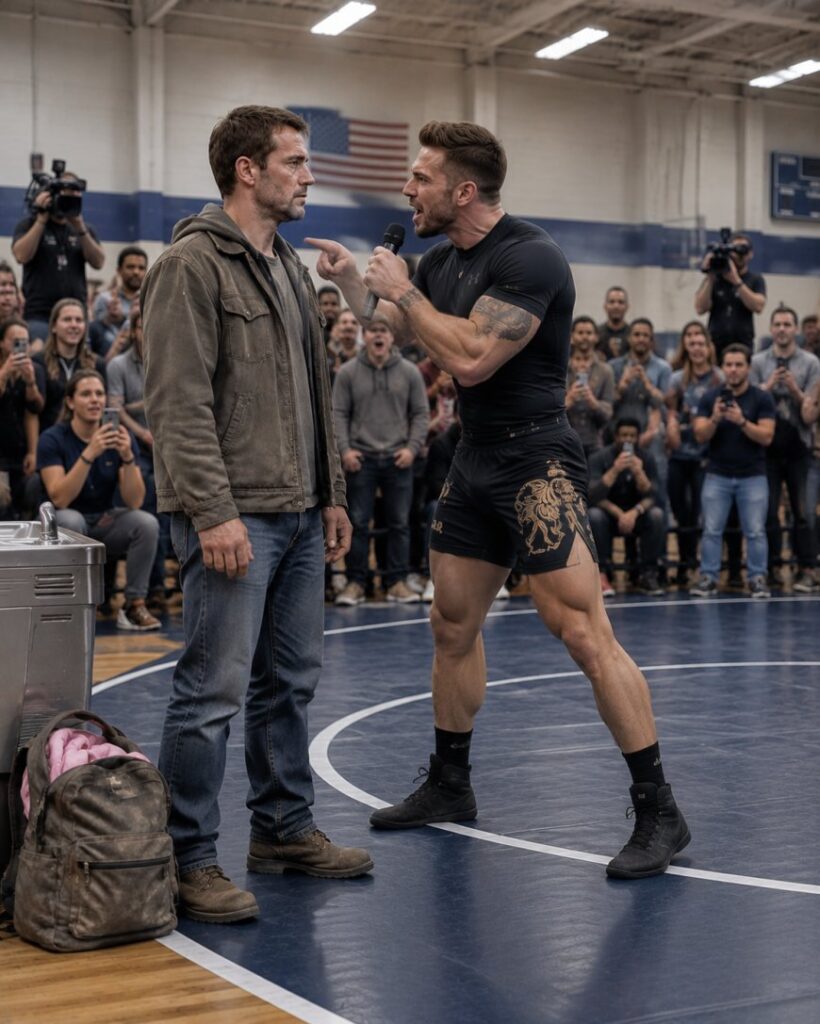
“I know,” Carl said again. “But it’s out there now. And by this afternoon, it’s going to be moving.” He paused. “The question isn’t whether people are going to find out who you are. That’s already happening. The question is how you handle what comes next.”
I looked at him. “My daughter gets off the school bus at 3:40,” I said.
“I understand,” Carl said.
“Whatever comes next doesn’t change that.”
“It shouldn’t,” Carl said. “And it won’t, if you decide it won’t.”
I buttoned my jacket. I was already thinking about how fast a story could travel. I knew something about that—from the Corps, from the way information moved when it found a channel, from how little control any individual had once a thing was in motion.
I had spent three years cultivating invisibility. And in 47 seconds on a Thursday afternoon, I had burned it down.
I wasn’t angry about it. But I was realistic about what it meant.
My phone buzzed as I walked to my truck. Unknown number. I let it go to voicemail. By the time I reached the vehicle, it had buzzed twice more.
I sat in the driver’s seat and checked the voicemails. First one: a local news station. Someone named Derek, assignment desk, requesting a comment or interview opportunity. Second one: a sports podcast I had never heard of. Enthusiastic. Very enthusiastic. Third one: Logan Pierce himself.
I listened to Logan’s voicemail twice.
Logan’s voice was different from the performance voice he’d used at Ironside. Quieter. More careful. The voice of a man choosing words instead of projecting them.
“Mitchell, it’s Pierce. I know you didn’t ask for any of this, and I’m not calling to apologize for the statement, because I meant every word of it. But I want to talk to you. Not for content, not for my brand. Privately. Because there’s something I want to offer you that I didn’t put in the statement.”
A pause.
“Call me back if you’re willing. If not, I understand.”
I sat in the truck for a moment. Then I started the engine and drove to my first service call.
I did not call anyone back.
My morning ran the way it was scheduled to run. The compressor unit took two hours. The second call stretched into the early afternoon. By 2:00, I was sitting in my truck in a commercial lot, eating the sandwich I’d packed at 5:30 that morning and thinking with the methodical patience of someone who had learned not to rush conclusions.
My phone had buzzed 14 more times. I had not answered.
By 2:30, my neighbor, Mrs. Chen, called. I answered that one.
“Ryan,” she said, and I could hear from her voice that something had happened. Not bad—she used a different voice for bad. This was the voice she used when something surprised her.
“What is it?” I said.
“There are two people outside your building,” she said. “With a camera. They’ve been there since noon.”
I closed my eyes briefly.
“Are they bothering anyone?”
“No, they’re just standing there. But I thought you should know before you come home.” A pause. “Ryan, I saw the video.”
I said nothing.
“You didn’t tell Lily.”
“I told her the basic facts.”
“The video has 300,000 views,” Mrs. Chen said. “It was filmed by someone in the crowd. The audio isn’t perfect, but you can see everything clearly.”
300,000. By noon on a Monday.
I opened my eyes. “Thank you for calling,” I said.
“What do you want me to do if they knock?” she asked.
“Tell them I’m not available,” I said. “And thank you, Mrs. Chen.”
I ended the call and sat with the number for a moment. 300,000 people had watched me pick up a backpack and walk onto a mat. 300,000 people had watched 47 seconds of something I had done for a single, simple reason that had nothing to do with any of them.
I thought about Lily getting off the bus at 3:40. I thought about camera people outside my building.
I made a decision.
I called Logan Pierce back.
Logan picked up on the second ring.
“Mitchell.”
“Tell me what you want to offer,” I said. No preamble.
Logan was quiet for a beat, like he was recalibrating. “I want to set something up,” he said. “A real event. Legitimate, organized, under a proper sanctioning body. You and I. Rematch. Professionally run, significant purse, nothing I’m pulling from a marketing budget. Real prize money. Real contract. Everything clean.”
I said nothing.
“Before you answer,” Logan said, “I want you to hear the rest. I’ve already talked to my promoter. He’s interested. Not because of the upset—because of the story. A single father, Marine veteran, steps off the floor of daily life and does what you did. That’s something people want to see more of.” Another pause. “The purse I’m offering you for one event is more than your current annual income. I’ve done the asking around.”
I let that land.
“And if I say no,” I said, “then the 20,000 was a real offer with no strings and you keep it and we never talk again.”
Logan said, “I mean that. I’m not trying to leverage you. You’ve already beaten me once in front of 200 people. I don’t have any leverage.”
I sat in my truck in the commercial lot, the sandwich half-finished on the passenger seat, the phone at my ear, the city moving around me the way it always moved—indifferent and constant and full of its own motion.
“I’m not a fighter,” I said. “Not anymore.”
“You were 47 seconds ago,” Logan said. “I don’t mean that as pressure. I mean it factually. What you did on Thursday—that doesn’t disappear. That’s in you. It’ll be in you whether you compete again or not.”
“I know that,” I said.
“Then you know that the only question is what you do with it.”
I looked at the clock on my dashboard. 2:48. 52 minutes until the bus.





