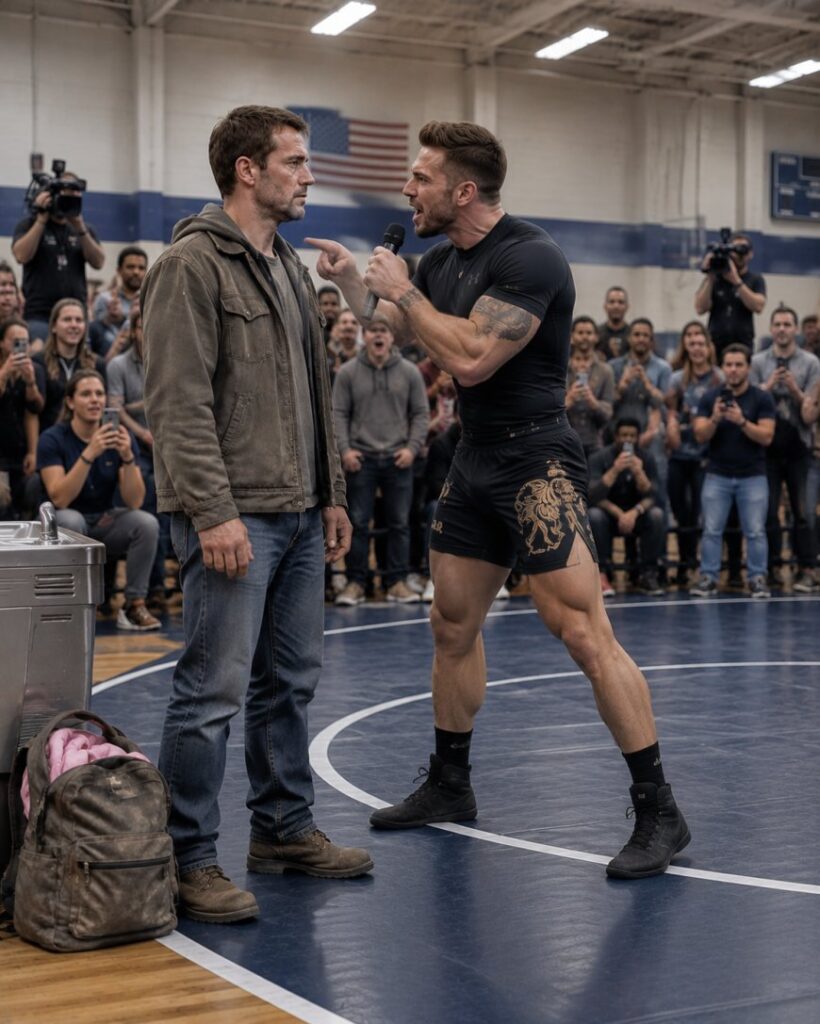
I dreamed about a man named Torres, who had been my closest friend in the Corps for two years—a compact and irreverent person from Albuquerque who had an opinion about everything and was right about most of them, and who had told me once, at 3:00 in the morning on a base in a country I no longer permitted myself to think about too directly, that the scariest thing about highly capable people was that they were usually the last ones to understand what they were worth.
I had told him he was full of it.
Torres had laughed and said, “Sure, Mitch. Keep telling yourself that.”
In the dream, Torres said it again.
I woke up at 6:30, two minutes before the alarm.
Friday. Lily had school. I had a service call at 8—a compressor unit at a commercial kitchen two miles away—and another one at 11:00 that I estimated would take most of the afternoon. I needed to call the school about the field trip form. I needed to get the truck to a tire place before the end of the month.
I got up, showered, dressed, started coffee, and was halfway through making Lily’s lunch when my phone buzzed again.
Different unknown number. I answered.
“Is this Ryan Mitchell?” Male voice. Measured, deliberate—not the voice of someone making a routine call.
“Who’s asking?”
“My name is Carl Hendrix. I own Hendrix Performance and Athletic Training—it’s a fitness facility here in Columbus. We do youth development programs, adult conditioning, some semi-professional training contracts.” A beat. “I was at Ironside yesterday. I watched what you did.”
I said nothing.
“I want to offer you a job,” Carl Hendrix said.
I set down the knife I’d been using to cut Lily’s apple into the specific eight equal slices she preferred and leaned against the counter.
“I’m employed,” I said.
“I know. I did some asking around after yesterday.” Another measured beat. “I’m not talking about a better version of what you’re currently doing. I’m talking about something different. I run a legitimate operation with real youth programming—kids 12 to 18, mostly from this side of town. A lot of them without much structured activity in their lives. I need a trainer. Someone who can teach discipline and physical skill and do it in a way that actually lands with kids who have good reasons not to trust people who show up with plans.”
I said nothing.
“I watched you walk off that mat,” Carl said. “And I watched you pick up that backpack. I don’t know what’s in it, but I saw how you picked it up, and that told me more than the fight did.”
I looked at the apple slices on the cutting board.
“What does the position pay?” I asked.
Carl told me. It was more than I made from the service calls and the delivery route combined—not by a life-changing margin, but by a real one. More importantly, the hours Carl described were day hours. Structured hours. The kind of hours that had a person home by 6:00 most evenings and off on weekends.
I was quiet for long enough that Carl said, “Still there?”
“Still here,” I said. “I want to think about it.”
“That’s fair. Can I call you back today?”
“Take until Monday,” Carl said. “I’ve been looking for the right person for this position for 11 months. I can wait a weekend.”
I thanked him and ended the call.
I stood in the kitchen looking at the apple slices, and from down the hall, the sound of Lily’s alarm going off—the one she’d set herself on a secondhand digital clock she’d configured with great ceremony the previous year, declaring that she was old enough to get herself up in the mornings. She almost always beat it by five minutes but considered the act of turning it off to be important to the ritual.
The alarm stopped. Her feet on the floor. Her door opening.
She appeared in the kitchen doorway, hair in the particular state of geological disruption that seven hours of sleep reliably produced, wearing the oversized t-shirt she used as pajamas, still mostly asleep in the eyes but functional enough to locate the kitchen and her father inside it.
“Morning,” she said.
“Morning,” I said. “Pancakes or toast?”
She climbed onto her chair at the table. Considered the question with visible seriousness. “Pancakes,” she said. “Because yesterday was a big day.”
I reached for the cabinet where the mix was. “It was,” I said.
“Are we different now?” she asked.
I looked over my shoulder at her. Her expression was entirely sincere—not dramatic, not performing, just genuinely curious in the direct way she had of asking the questions that most adults had learned to approach sideways.
“Are we different from yesterday?” she clarified.
I turned back to the cabinet. “Some things changed,” I said. “We’re still us.”
She seemed to find this answer acceptable. She pulled her knees up to her chest on the chair—which she did when she was settling into a comfortable morning—and said, “Good. I like us.”
I started the pancakes.
I was thinking about the phone call. About Carl Hendrix, and the job, and the hours, and what day hours would mean—concretely, practically, in the actual texture of daily life. I was thinking about Torres, telling me that capable people were always the last to understand what they were worth. I was thinking about a job that involved 12-to-18-year-olds from this side of the city who had good reasons not to trust people who showed up with plans.
I knew what that meant. I’d been one of them. Not in Columbus—a different city, a different decade—but the same particular combination of circumstance and limited margin, and the presence of exactly one adult who had managed to show up consistently enough that something in my structure had held when it might otherwise have broken.
I knew what it cost to be that adult. I knew what it cost not to be one.





