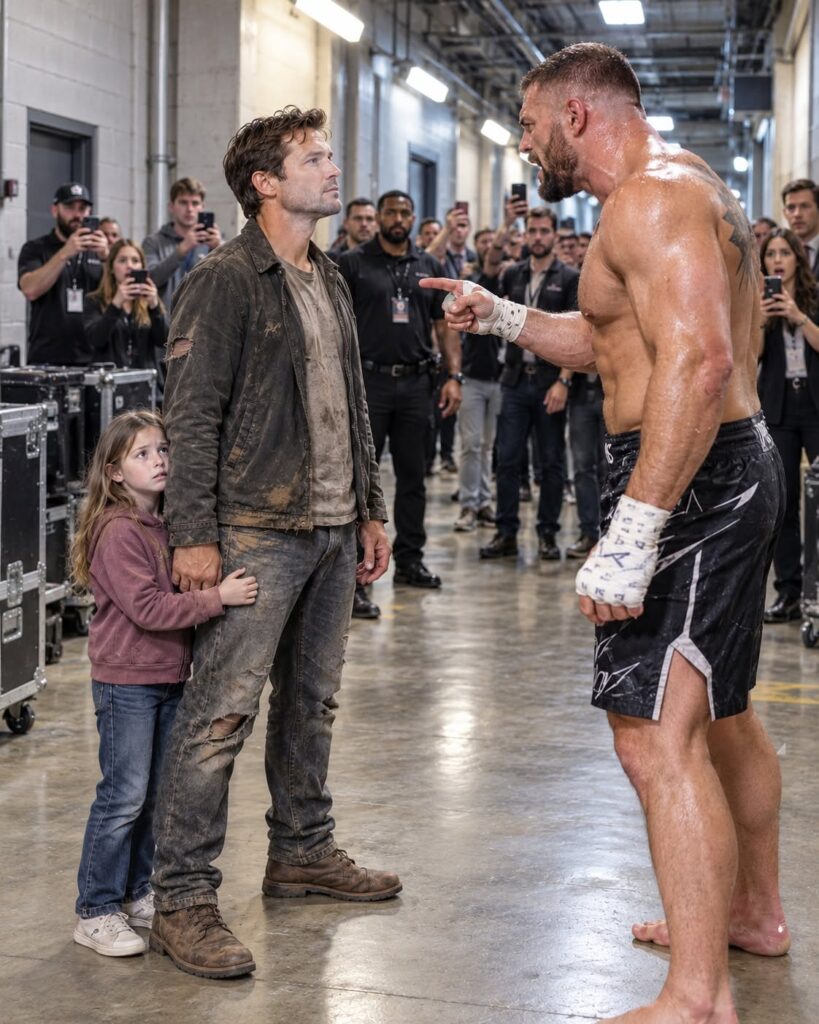
I flagged the warning signs to the management team three times in the months before the incident.
The first time, they thanked me for my thoroughness.
The second time, they assured me Cal’s medical team had cleared him.
The third time, the conversation was shorter and the thanks were absent.
The sparring session in question was six days before a main event. Cal had been showing asymmetrical movement for two weeks. Favoring his left side in ways that weren’t tactical. That were compensation.
I told the room to stop the session.
The manager told the room to continue.
I walked out of the gym. I drove to the parking lot and sat in my truck for twenty minutes trying to decide if I should go back in. And by the time I had decided I should, my phone was already ringing.
Cal took a hit from a sparring partner that ended his career. He was twenty-five years old. He recovered fully from the immediate injury, but the accumulated damage from the preceding months meant the neurological risk of continuing to compete was too significant to permit.
I didn’t cause that. But I built the system that produced it alongside the people who let it continue. And I stayed long enough to be part of what allowed it to happen. One decision at a time. Over eighteen months.
I looked at Sadie and told her the part I had never told anyone.
When Leah was pregnant with her, I looked at the life I’d been building and understood that the version of me who had sat in a parking lot for twenty minutes when it mattered — who hadn’t trusted himself to walk back into that room and stop what was happening — was not the person I wanted to be when she arrived.
I didn’t leave because I hated the sport. I left because I had reached the limit of what I could be inside that world. And I needed to become a different kind of person before I had a child watching me.
“I didn’t want you to grow up thinking that what I did there was what strength looked like,” I said. “I needed to figure out what it actually looked like before I could show you.”
Sadie was quiet for a while after I finished.
The quiet wasn’t the organizing-information kind she usually wore. It was the kind that meant something had landed differently than expected and she was giving it the space it needed.
She asked me if I thought I had become that different person.
I said I thought I had spent nine years trying to.
She looked at me for a long moment. Then she said, “I think you did.”
She said it plainly. Without decoration. And it arrived with a weight I hadn’t been prepared for.
Warren, who had been sitting quietly through all of it, said only that the question was never whether I’d made mistakes. It was whether I knew when to stop fighting and when to stop running from having fought.
“Those are two different things,” he said. “You’ve spent nine years treating them like the same one.”
I called Carol Finch that afternoon.
The footage request went through the inquiry process within hours. The full corridor recording ran for four minutes and thirty-seven seconds.
It showed Rhett coming down the hallway. It showed the phone being knocked to the floor. It showed Sadie picking it up. It showed me stepping forward, and the first push, and the first warning. Then the second push, and the second warning. Then Rhett’s hands on my collar, and the third warning given to a man who had been offered every available exit and had not taken any of them.
It showed me releasing Rhett immediately and stepping back to Sadie without a follow-up of any kind.
The organization released the footage publicly with a statement that evening.
By the following morning, the narrative had shifted with the decisive speed of something that had been under pressure from the wrong direction and finally received accurate information.
The cut clip didn’t disappear. But it stopped spreading. Rhett’s live stream began being quoted alongside the full footage as illustration of the same problem from a different angle. The formal inquiry concluded within seventy-two hours. Rhett received a significant suspension for threatening behavior toward event attendees and for publicly misrepresenting the incident.
I was cleared without qualification.
The sports center called to say my access card had been reactivated and my position was available whenever I was ready to return.
Three organizations reached out over the following week. Two regional promotions and one national-level outfit. Each with versions of the same offer. Consulting arrangements. Coaching contracts. Figures with more zeros than my current salary had in its entirety.
I listened to each of them and declined each of them with the same brevity.
I wasn’t returning to that world.
What I was doing with my time was already decided.
Warren’s proposal had come the same afternoon as the footage release. Put together quickly, but not carelessly.
A program at the community sports center. Not a training camp. Not a competitive development pipeline. A curriculum built around self-defense and conflict resolution for the specific people who most needed those things and had the least access to them.
Parents raising kids on their own. Teenagers who had been on the receiving end of the kind of power Rhett had tried to use in that corridor. Women who wanted to understand their own physical capability before something forced them to find out.
Warren would bring the structure and the network. I would bring everything else.
I said yes before Warren had finished the sentence.
A reporter from a regional outlet interviewed me about two weeks after the footage was released. The interview was brief at my request, and most of my answers were shorter than the questions.





