Eight years in state prison.
Linda Green lasted two more years after that.
Then she was gone too.
Darnell was fourteen when he became the man of the house.
He was supposed to start high school that fall with a basketball scholarship to St. Ignatius, one of the best prep schools in Chicago.
Scouts had already started watching him.
People said he had a shot at Division I, maybe even the NBA, if he kept developing.
He gave it all up.
The day after their mother’s funeral, Darnell walked into the kitchen where Gloria sat staring at nothing and said, “I’m going to get a job.”
“Baby, you’re fourteen.”
“I know how old I am, Grandma. But somebody’s got to help pay the bills. Somebody’s got to take care of Isaiah. Dad’s gone. Mom’s gone. It’s just us now.”
He got a job at a grocery store bagging groceries after school and on weekends.
Then a warehouse.
Then another warehouse.
He made sure Isaiah did his homework every night.
Made sure he had food, clothes, and a roof over his head.
Made sure he knew he was loved, even when the world seemed determined to teach him otherwise.
“I promised Mom,” Darnell told Isaiah once, late at night when neither of them could sleep.
The words came slowly, painfully, like they cost him something.
“Before she died, I held her hand, and I promised I’d take care of you. No matter what. I promised I’d never let anyone separate us.”
He kept that promise.
For eight years.
Through exhaustion, poverty, and a system that seemed designed to crush them.
Darnell kept that promise.
Until the night everything fell apart again.
June 14th was warm and restless.
There was a protest in Grant Park.
Peaceful.
Organized.
Legal.
Thousands of people marched for justice after another unarmed Black teenager had been shot by police three weeks earlier.
The victim’s name was Marcus Williams.
He was fifteen years old.
He had been walking home from a friend’s house when a police officer mistook his cell phone for a gun.
Marcus ran.
The officer shot him four times in the back.
Marcus died on the sidewalk less than a block from home.
The officer was placed on paid administrative leave.
That was it.
That was the consequence for killing a fifteen-year-old boy.
The protest was supposed to be peaceful.
For most of the evening, it was.
Families with children.
Elderly people in wheelchairs.
Students.
Pastors.
Parents.
A sea of people demanding to be heard.
Darnell was not there to protest.
He was there as a volunteer medic.
He had just finished his EMT clinical rotations, and the organizers had asked for medical volunteers.
Darnell showed up with his first-aid kit, wearing a bright yellow vest with MEDIC written in reflective letters.
“People are going to get hurt out there,” he told Isaiah before leaving. “Pepper spray, stampedes, rubber bullets. Someone’s got to help.”
Isaiah wanted to go.
Darnell refused.
“You’ve got finals next week. Stay home. Study. I’ll be back by midnight.”
“But—”
“No buts, Isaiah. I need you to be smart. That means staying out of trouble. Promise me.”
Isaiah promised.
He would regret that promise for a long time.
At 9:30 p.m., the protest changed.
Later, people argued about what happened.
Some said a protester threw a water bottle.
Others said the police attacked without provocation.
The video was chaotic, inconclusive, full of smoke and screaming.
But one thing was clear.
At 9:30, police moved in.
Tear gas canisters arced through the air.
Rubber bullets cracked like thunder.
The march became a stampede as thousands ran in every direction at once.
Darnell was near the back, treating minor injuries.
Twisted ankles.
Panic attacks.
Dehydration.
When the chaos started, he stayed.
People needed help.
That was why he had come.
He was kneeling beside an elderly woman who had been trampled, wrapping a bandage around a deep gash in her leg, when Sergeant Derek Morrison appeared.
Ten years had changed Morrison.
He had been promoted twice since arresting James Green.
Now he led a tactical unit and had a reputation for “tough policing,” a phrase the department praised and the community feared.
He walked up behind Darnell.
Looked down at the young Black man kneeling on the ground.
And smiled.
The smile of a man who saw an opportunity.
What happened next was captured on three cell phone videos.
Different angles.
Same truth.
Morrison approached Darnell from behind.
There was no contact.
None.
Darnell did not turn.
Did not swing.
Did not touch him.
Morrison simply fell.
He dropped to one knee, grabbed his chest, and screamed, “Assault! He assaulted me! Officer down!”
Four officers appeared as if they had been waiting for the cue.
They tackled Darnell, drove his face into the concrete, and wrenched his arms behind his back until something in his shoulder popped.
“I didn’t touch him!” Darnell screamed. “I was helping her! Check the video! I didn’t touch anyone!”
They did not listen.
They never did.
In the back of the police van, away from cameras, two officers took turns beating Darnell until he stopped screaming.
Then they beat him some more.
“That’s for your daddy,” one whispered in his ear. “Sergeant Morrison remembers.”
At 2:17 a.m., Isaiah’s phone rang.
He had been asleep, or trying to sleep, waiting for Darnell to come home.
The ringtone cut through the silence like a knife.
Unknown number.
Chicago area code.
Isaiah answered.
“Is this a family member of Darnell Green?”
The voice was cold, official, empty.
“Yes. I’m his brother. What happened? Is he okay?”
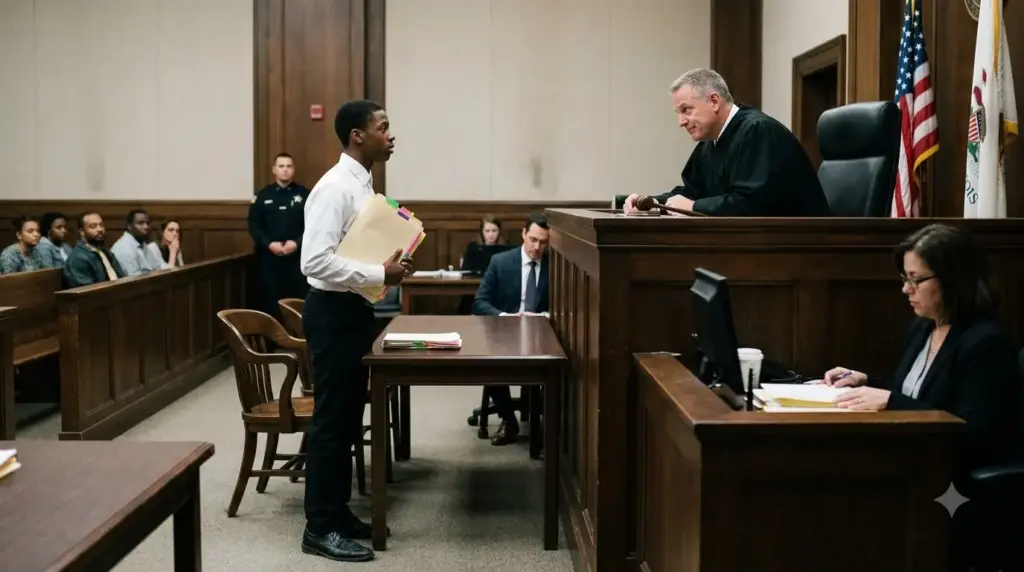
“Darnell Green has been arrested and charged with assault on a police officer. He is being held without bail pending arraignment tomorrow morning.”
Isaiah could not breathe.
The room spun around him.
“Assault? That’s not possible. Darnell wouldn’t—”
“I’m just providing notification, sir. You can contact the Cook County Jail for more information.”
The line went dead.





