The parking lot was late-afternoon quiet. I crossed it and got into the Silverado, and Evan was right where I’d said he’d be — sitting in the passenger seat with his hands in the front pocket of his hoodie, looking at me with an expression that was trying very hard to look neutral and not quite managing it.
Evan looked at my hands first, checking without asking directly. No blood, no swelling. Then he looked at my face, which told him something, but not everything. After a moment, he asked if I had won.
I put both hands on the steering wheel but didn’t start the truck. I looked through the windshield at the low brick front of the building we had just left, at the Iron Crest sign over the entrance, and thought about how to answer a question that was actually two or three questions stacked inside each other. Then I said it wasn’t really about winning or losing.
Evan made a face that I recognized — the face my son made when he suspected an adult was technically answering his question while actually avoiding it. I saw the face, acknowledged it by starting the truck and pulling out of the lot, heading west without a particular destination in mind, just needing to be moving while I worked out how to say the next thing correctly.
I drove for a few minutes and then pulled into the parking area in front of Brier Creek Hardware, which was closed on Saturday afternoons, leaving the lot empty and quiet. I put the truck in park and turned to face my son, because this was not a conversation to have while watching traffic.
I started by telling Evan something I hadn’t told many people. Not the statistics of it, not the years of service or the deployments or the operational details stored in a compartment I rarely opened, but the thing underneath all of it. I told him that for a long time, when I was young and in training and then in the field, I had believed that the measure of a man was what he could survive. How much he could endure. How much he could absorb. How much he could dish out and keep going. I had believed this sincerely, and the institution I served had done nothing to discourage me from believing it. And by most external measures, the belief had served me well for sixteen years.
But belief systems get tested, I said — not in the obvious moments of acute danger, where the training takes over and thinking becomes a liability, but in the long, unglamorous hours afterward. In the moments when the crisis is over and you’re still there with yourself and the choices you made.
I told Evan that the men I had respected most over the course of my career were not the ones who never felt afraid. They were the ones who felt afraid exactly as much as the situation warranted, took that information seriously, and then did what the moment required of them anyway. Fear was data. It told you something real was at stake. The question was never whether to feel it. The question was always what you did next.
Evan had been listening without interrupting, which was how he listened when something was getting through. After a moment, he said the thing he hadn’t quite managed to say before — that the reason he’d wanted to learn martial arts wasn’t really about the guys at school. Or it was about them, but not the way he’d described it. He hadn’t been looking for a way to fight back. He’d been looking for a way to stop being afraid of them. Because he figured if he got good enough, the fear would just go away, and he wouldn’t have to feel it anymore.
I let that sit before I answered. Then I told him the truth: that the fear doesn’t go away. I said I had been in situations that were objectively terrifying, including to myself. And what changed over time was not the presence of fear but my relationship to it. I stopped treating it as an enemy and started treating it as information. I stopped asking whether I was afraid and started asking what the fear was telling me, and whether the thing I was afraid of was actually as large as it felt, and whether what I needed to do next was something I was capable of doing. Even with the fear present. Most of the time, the answer to the last question was yes.
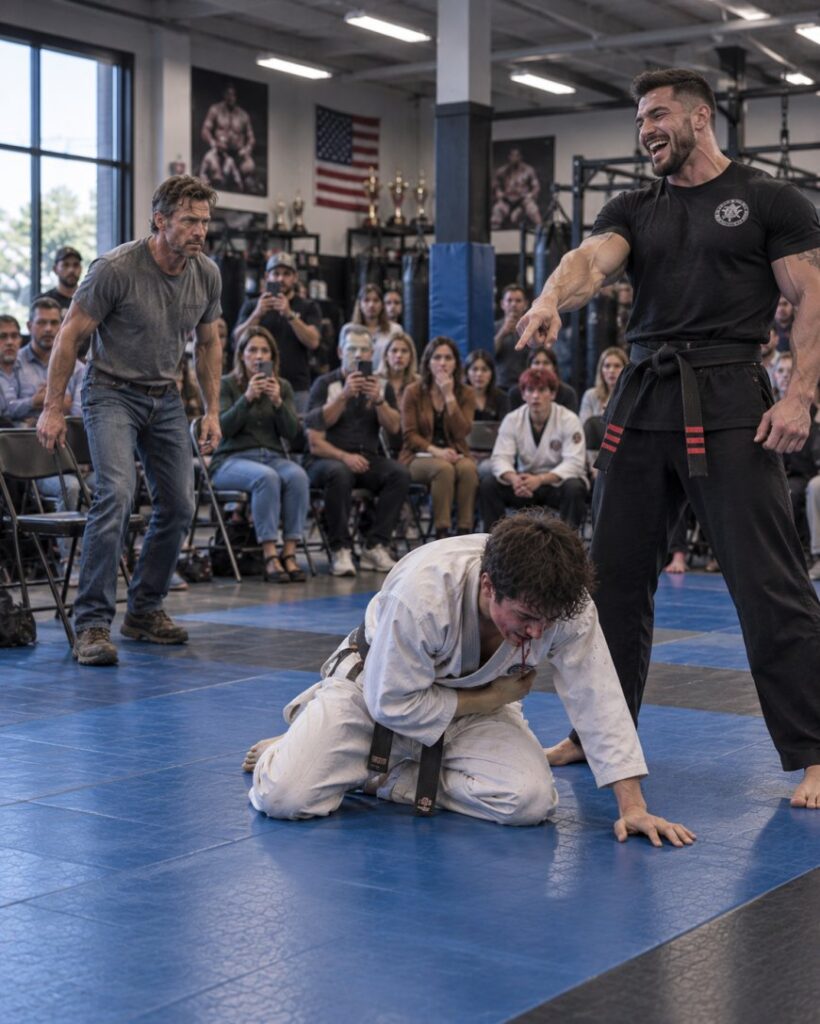
I told Evan directly that what had happened that afternoon in that gym was not something I wanted him to learn from in the way it might seem. Not the fight itself — the outcome of the fight was almost beside the point. What I wanted Evan to understand was the decision at the end of it. When Blake was on the mat and I had every physical means available to make the afternoon into a very different story, I had chosen not to. And that choice was not weakness. It was the specific and difficult exercise of having power over a situation and using exactly as much of it as the situation actually required — and not one gram more. That, I told Evan, is control. Not the kind you show in a sparring match. The kind you show in the moment when you don’t have to show restraint at all, and you show it anyway.





