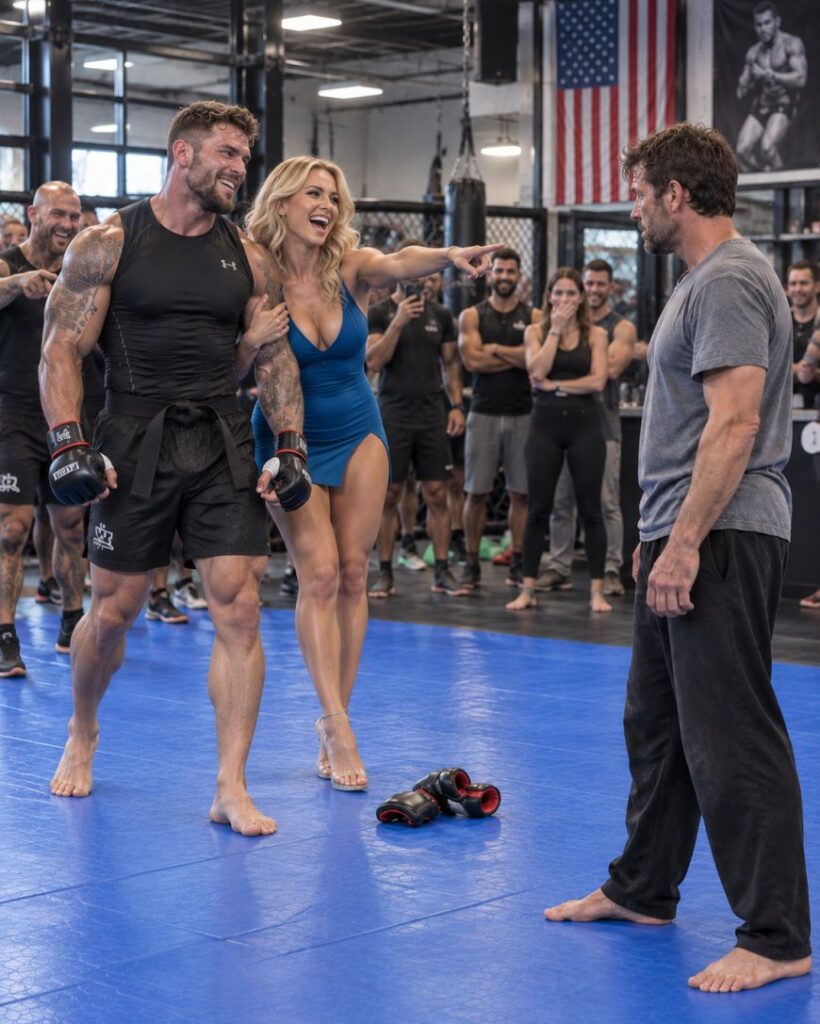
At the gym, I discovered something I should have understood sooner. I didn’t have to kill that man. I didn’t have to become him either. I could carry what he knew without letting him make every decision.
My limp remained. Some mornings it was worse. I kept selling HVAC systems. I became regional manager. My coworkers eventually learned I had served, but I never became the guy telling deployment stories at company dinners. When somebody asked what the SEALs taught me, I usually said:
“Good socks matter.”
That was enough.
Marcus and I started meeting for breakfast once a month. Then we began volunteering with a veterans’ transition group. Not teaching combat. Teaching ordinary life. Job interviews. Marriage communication. Money. Sleep. How to sit in a restaurant with your back to a door and still enjoy dinner. How to ask for help before your marriage becomes a house full of silence.
One younger veteran once asked me:
“How do you know when you’re normal again?”
I thought about it.
“You don’t.”
He looked disappointed. I smiled.
“You build a life that fits who you are now.”
Years passed. My knee eventually required replacement. When the surgeon told me, I laughed.
“What?”
“Nothing.”
I remembered Derek kicking it because he thought damage made me vulnerable.
The new joint hurt like hell for weeks. Then one morning I walked to the mailbox without limping. I stood there in ridiculous slippers, holding three pieces of junk mail, and cried. Not dramatically. Just tears sliding down my face while a neighbor’s sprinkler clicked across the lawn.
The body remembers pain. It can learn new movement too. So can a life.
I eventually bought a smaller house. No history in it. No arguments trapped in walls. There was a little workshop out back and a porch that caught evening light.
Marcus helped me move. He carried one box inside and frowned.
“Kitchen?”
“Garage.”
“It says dishes.”
“Garage.”
“You need therapy.”
“Already did it.”
“More.”
I laughed. That sound came easier now.
Years later, I received a Christmas card from Claire. No return-address drama. No long letter. Just a photograph of her standing beside an older woman I recognized as her mother.
Inside:
Cole,
I hope your life is peaceful.
I finally understand peaceful isn’t the same as empty.
Thank you for the years that were good.
I’m sorry for how I ended them.
Claire.
I put the card on the mantel for Christmas. Then into a drawer. Not hidden. Not displayed forever. Just kept. Because fourteen years deserved more honesty than either worship or erasure.
On my fifty-eighth birthday, Marcus came over with steaks. We sat on the porch while rain moved across the yard. My knee ached. He noticed.
“Storm coming.”
“Already here.”
He raised his beer.
“To boring.”
I laughed.
“To boring.”
The word no longer insulted me. Boring was coffee before sunrise. A mortgage nobody was fighting over. A dog sleeping under the table. A knee that hurt because weather changed, not because someone was targeting it. Friends who knew when silence meant peace and when it meant trouble. A home where nobody needed me to perform danger to prove I was alive.
Near sunset, Marcus left. I remained outside. Rain softened against the roof. My dog shifted against my boot. Somewhere in the neighborhood, a child shouted. A lawn mower stopped. Ordinary life settling into evening.
I thought about that blue mat. Derek’s wrist in my hand. The old instinct telling me exactly how much pressure would turn control into damage.
For years afterward, people who heard some version of the story assumed the important moment was when the former SEAL showed the young fighter what a “real fight” looked like. They were wrong.
The important moment was the one nobody cheered. The moment I stopped.
That was what Claire had misunderstood about my quietness. What Derek had misunderstood about my limp. What I had misunderstood about myself.
I hadn’t become weak when I left the Teams. I had become responsible for deciding what strength was for.
Sometimes strength was fighting. Sometimes it was surviving. Sometimes it was leaving a marriage that had become dishonest. Sometimes it was admitting your wife had been wrong about your worth but right that you had disappeared emotionally. Sometimes it was sitting in therapy and answering a question you would rather dodge. Sometimes it was letting somebody walk away without punishing them for going.
And sometimes strength was having the ability to hurt someone, feeling every old reflex wake up in your body—and opening your hand.
The rain cooled the evening. I reached down and rested that hand on my dog’s head. He sighed. I smiled.
Inside, the house was quiet. Not the suffocating quiet Claire and I had lived inside near the end. A different kind. Windows cracked open. Music playing low in the kitchen. A half-finished book on the coffee table. Marcus’s empty bottle waiting beside the sink. Evidence of a life being lived instead of endured.
I stood. My knee barely complained. At the doorway, I looked back once at the darkening yard. Then I turned off the porch light and went inside.
I had spent years believing peace was what remained when you removed danger. I finally understood it was more than that. Peace was something you chose. Something you practiced. Something you protected without turning it into a prison.
And for the first time since I came home from war, I wasn’t pretending to be harmless.
I was simply free.
The dog lifted his head before I heard the knock. Three soft taps. Not urgent. Not aggressive. Nothing like Derek’s voice booming through my truck speakers years earlier, demanding that I prove something.
Still, I froze halfway between the kitchen and living room. It was nearly nine. Rainwater traced silver lines down the front windows. The music in the kitchen had moved to another song, something slow and mostly piano. My porch light was off.
The dog stood. His ears angled toward the door.





