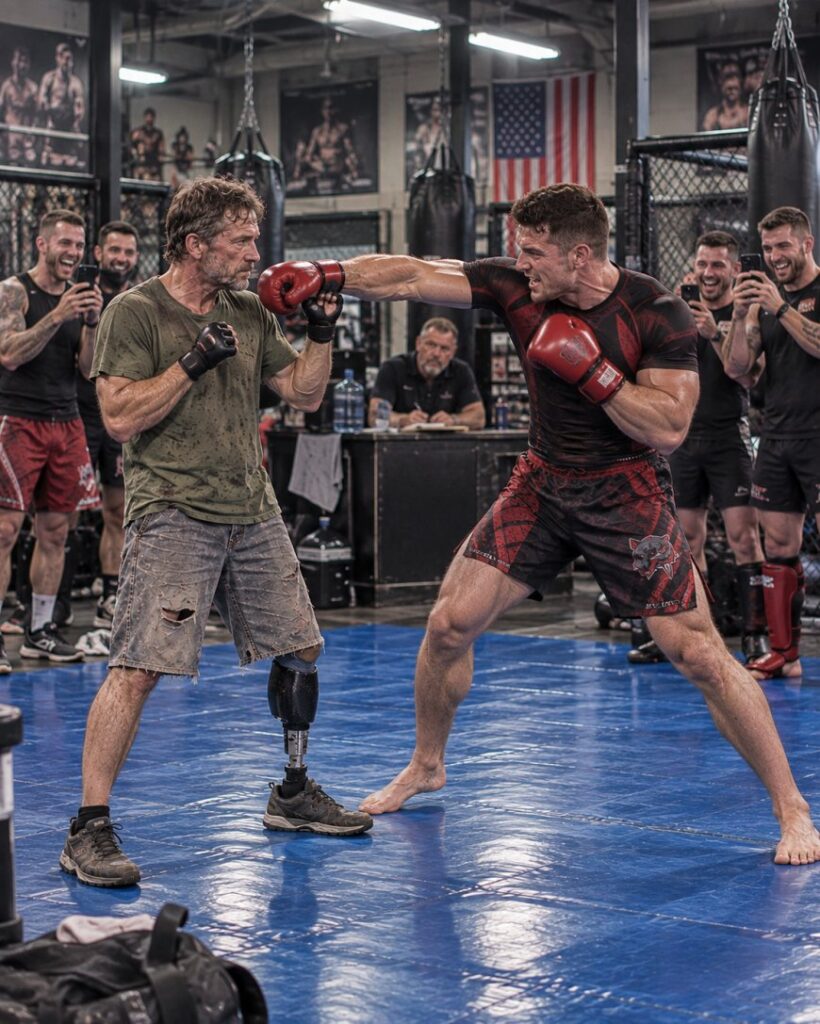
Garrett was quiet for a long moment. Then he set down the towel and sat on the bench next to Trent. He didn’t look at him. He just stared at the heavy bag.
“You panicked because you’ve never been in a real fight,” Garrett said. “You’ve been in matches. You’ve been in tournaments. You’ve been in sparring sessions with rules and referees and time limits. But you’ve never been in a real fight. A fight where the other person doesn’t care about the rules. A fight where the other person doesn’t care if you live or die.”
“I’ve been in fights,” Trent said.
“No,” Garrett said. “You’ve been in competitions. That’s different.”
Trent wanted to argue. He wanted to say that he’d been hit before, that he’d been choked before, that he’d been in pain before. But he knew Garrett was right. It was different. He’d always known the referee would stop it. He’d always known the round would end. He’d always known he could tap out.
“When I was in Fallujah,” Garrett said, “I learned something. I learned that the difference between a fighter and a survivor isn’t technique. It isn’t strength. It isn’t speed. It’s what’s in your head. A fighter thinks about winning. A survivor thinks about surviving. And when you’re in a real fight, surviving is the only thing that matters.”
Trent was quiet for a long time. Then he said, “Can you teach me?”
Garrett shook his head. “No.”
“Why not?”
“Because you can’t teach survival. You have to live it. You have to go through something that breaks you, something that strips away everything you thought you knew about yourself, something that makes you realize you’re not as strong as you thought you were. And then you have to survive anyway. You have to keep going. You have to keep fighting. Not because you want to win. Because you want to live.”
Trent looked at the bruise on his neck. It was almost gone now. Just a faint yellow-green shadow. “I don’t want to go through that.”
“Nobody does,” Garrett said. “That’s the point.”
Trent kept coming back. He didn’t spar. He didn’t train. He just sat in the corner and watched. Sometimes he’d ask Garrett questions. Sometimes Garrett would answer. Mostly they just sat in silence, watching the heavy bag swing back and forth.
After a month, Trent started cleaning. Not because Garrett asked him to. Not because Vic asked him to. Just because he wanted to. He mopped the floors, scrubbed the toilets, fixed the drywall. He didn’t ask for anything in return. He just did it.
After two months, Trent started helping Jesse. Not with sparring — he wasn’t ready for that yet. But with the basics. He showed Jesse how to wrap his hands. He showed him how to stand. He showed him how to keep his chin tucked. He didn’t yell. He didn’t criticize. He just taught.
Jesse was nervous at first. He kept waiting for Trent to turn on him, to choke him again, to make him feel small. But Trent didn’t. Trent was patient. Trent was quiet. Trent was almost… kind.
After three months, Trent sparred with Jesse. Light contact. Technical. He let Jesse work. He let Jesse make mistakes. He didn’t punish him. He didn’t humiliate him. He just taught.
When the round ended, Jesse was grinning. “That was fun,” he said.
Trent nodded. “Yeah. It was.”
Garrett kept coming in on Tuesdays and Thursdays. He kept hitting the heavy bag. He kept sweeping the floors. He kept fixing the drywall. He kept wearing the same faded gray board shorts and the same frayed green T-shirt.
But something had changed. Trent was different. The gym was different. The air felt lighter.
One Tuesday night, after everyone had gone home, Garrett sat on the bench in the locker room, unstrapping his prosthetic. Trent walked in, carrying a mop.
“Vic said I could lock up tonight,” Trent said.
Garrett nodded. “Okay.”
Trent started mopping the locker room floor. Garrett wiped down his prosthetic. The silence between them was comfortable. Not heavy. Not tense. Just… quiet.
“I used to think I was strong,” Trent said, not looking at Garrett. “I used to think I was better than everyone else. Because I had money. Because I had muscles. Because I had a black belt. But I wasn’t strong. I was just… loud.”
Garrett didn’t say anything. He just listened.
“The night you choked me,” Trent said, “I thought I was going to die. I really did. I thought you were going to kill me, and nobody was going to stop you. And then you let go. You let go, and you stood up, and you walked away. And I realized… I realized you could have killed me. You could have killed me, and there was nothing I could have done to stop you. And you didn’t.”
“No,” Garrett said. “I didn’t.”
“Why not?”
Garrett thought about it. He thought about the IED, about the three friends he’d lost, about the lower half of his tibia. He thought about all the things he’d done in Fallujah, all the things he’d seen, all the things he’d survived. He thought about how easy it would have been to keep pushing, to keep holding, to keep squeezing until Trent stopped moving.
“Because I’m not a killer,” Garrett said. “I’m a survivor. There’s a difference.”
Trent stopped mopping. He looked at Garrett. “What’s the difference?”
“A killer takes life,” Garrett said. “A survivor protects it. Even when it doesn’t deserve it. Even when it’s easier not to.”
Trent was quiet for a long time. Then he said, “I’m sorry.”
“I know,” Garrett said. “You already said that.”
“I know. I just… I wanted to say it again. Because I mean it.”
Garrett nodded. “Okay.”





