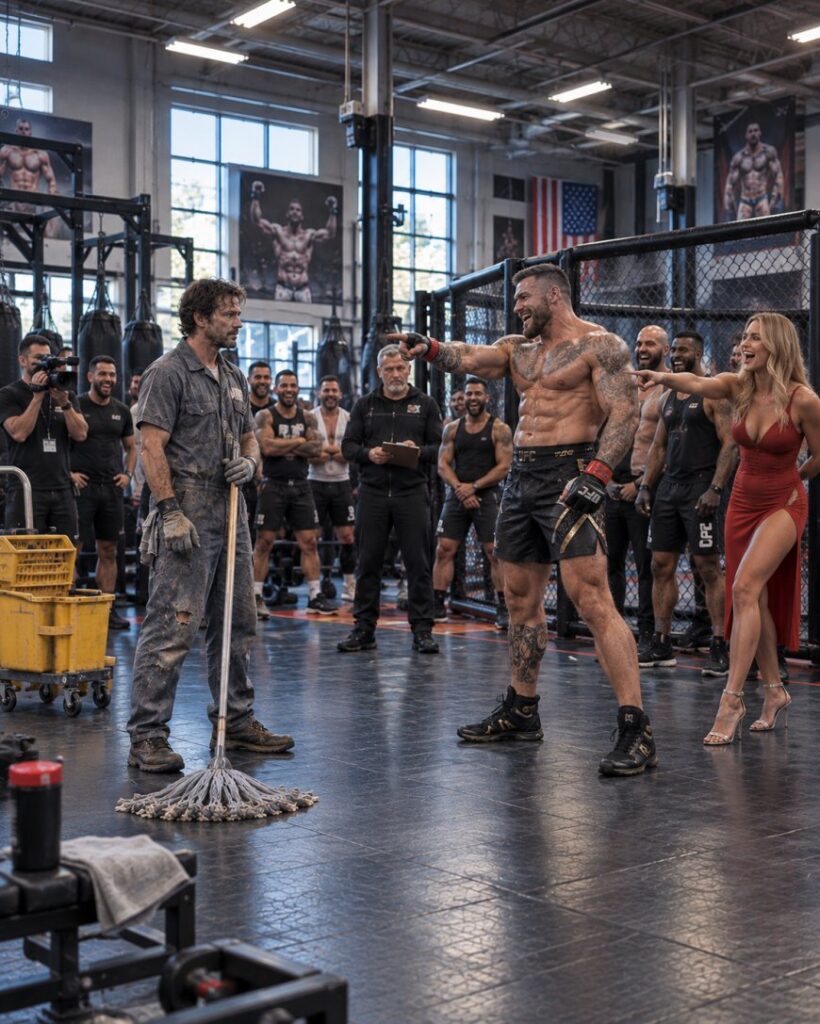
Julian had shown none of it. He had finished the thing and then gone back to finishing his shift. And those two actions had been of equal weight to him, and that was the part Cole couldn’t move past.
He heard the locker room door open. Julian had come in to return the spare gloves to the equipment shelf. He set them down and was turning to leave when Cole spoke.
“You could have ended it earlier.” Cole’s voice came out flat, without the smooth confidence that usually lived in it. “Couldn’t you?”
Julian turned. “Yes. More than once. Several times.”
Cole absorbed that. He looked back at the mirror, then back at Julian. “So why didn’t you?”
Julian leaned one shoulder against the door frame. Not in a rush, but not staying longer than the answer required.
“Because the point of sparring isn’t to find out who can damage who,” he said. “It’s to walk out better than you walked in. Both of you. That’s the whole point. The minute you make it about something else, somebody gets hurt and nobody gets better.”
Cole sat with that. He had been told versions of this before — by coaches, by cornermen, by fighters he respected. He had nodded at all of them. This was the first time the words had arrived from a direction that made nodding impossible.
“I put you in a bad spot,” Cole said. It came out without rehearsal, without the managed quality of a public statement.
Julian looked at him steadily. “You did.”
“The thing I said. About your daughter. That’s the one I’m talking about.”
“Yes.”
Cole didn’t try to explain it or soften the edges of it. He let it sit in the room, which was the right thing to do, and Julian recognized that it was the right thing and gave him the credit for it with a small nod.
Then Julian pushed off the door frame and walked out, and Cole stayed where he was for a while longer.
The next morning, Cole posted a video shot on his phone in what appeared to be the parking lot of the gym. No ring light. No editing. No music underneath it. He looked directly at the camera and spoke for a little over four minutes.
The core of what he said was this: He had looked at a man doing his job and decided, without knowing anything about him, that the job was the whole story. He had decided that because Julian cleaned the floors, he was available — that his time, his body, and his dignity were things Cole was entitled to use.
He said he had been wrong about that. He said the word wrong without qualifying it or appending any explanation, because explanations in that position function as excuses, and he understood the difference.
He said Julian Shaw had shown him more about what it meant to be a fighter in three minutes than most people had managed in four years, and that the debt was entirely in one direction.
He tagged Julian’s name in the post — even though Julian had no public profile to tag — and he said that was on purpose. That Julian was a real person and not a character in a story about Cole’s growth.
The response was significant and immediate, and most of it was not about Cole.
Julian heard about the video from Coach Ray, who showed it to him before the first fighters arrived that morning. Julian watched it standing next to the equipment shelf with a cup of coffee going cold in his hand. When it finished, he handed the phone back to Ray without saying anything, and Ray — who had known Julian for six years and understood his economy with words — didn’t push for a response.
In the weeks that followed, two things happened that Julian hadn’t planned for.
The first was that fighters at Apex started lingering near wherever he was working, asking questions that began as casual and became specific — about weight distribution, about defensive positioning, about why certain combinations broke down at the third or fourth strike even when the first two landed clean. Julian answered them the same way he answered Maya’s questions: directly, with more care than people expected, and without making anyone feel that their question had been a small one.
The second thing was a conversation with the gym’s owner, a man named Dennis who had run Apex for eleven years and had the particular quality of attention that comes from spending a decade watching people train.
Dennis asked Julian to come into his office and said he’d been watching him for a long time — and that what had happened in the cage had clarified something Dennis had suspected but not acted on. He offered Julian the position of technical and defensive coach, with a proper salary and regular hours.
Julian asked one question: whether the schedule would allow him to leave by 2:30 in the afternoon on school days.
Dennis said yes without checking anything, which meant he’d already thought about it.
Julian said yes.
Cole became his most consistent student, in a way that had nothing performative in it. He showed up to sessions early and left late, and he stopped bringing the camera crew — not because anyone asked him to, but because he had begun to understand that the version of himself he was building in those sessions was not something that benefited from being watched.
He asked questions differently than the other fighters. More specifically. With less ego attached to the asking. Julian noticed this and adjusted accordingly, pushing Cole harder in the areas where the ego had previously made him unteachable.





