Others become politicians, executives, attorneys, or people with considerable public influence.”
He paused.
“Imagine knowing exactly what frightens them.
What makes them angry.
Whose approval they need.
What pressure makes them surrender.”
I stared at him.
“And people were paying for that information?”
“Yes.”
The silence became heavy.
Ethan looked down at his hands.
“Profiles,” he whispered.
Dad nodded.
“Psychological profiles.”
Certain wealthy families had effectively allowed Hawthorne to study their own children so they could predict and manipulate their future decisions.
But the operation hadn’t remained limited to wealthy students.
Scholarship students were included too.
Not because they possessed money.
Because they interacted with the children who would someday possess it.
The school wanted to identify people who could influence future heirs.
Friends.
Romantic partners.
Competitors.
Potential rivals.
Anyone whose loyalty, independence, or influence might one day matter.
“That’s insane,” I said.
Dad’s expression darkened.
“Yes.”
I thought about every teacher who had ever written a disciplinary report, every counselor who’d asked questions that seemed unrelated to schoolwork, and every student who believed their private struggles remained private.
Then I remembered the message on Ethan’s phone.
“What did any of that have to do with Mom?”
Dad looked at me.
“Your mother’s profile was different.”
“How?”
“It was classified as high resistance.”
“Resistance to what?”
“Social pressure.
Intimidation.
Attempts to control her decisions.”
I stared at him.
“People were afraid because she didn’t care what other people thought?”
“It’s more complicated than that.”
Anna, he explained, had shown unusual composure during stressful situations.
She remained calm when publicly embarrassed.
She reacted quickly when physically threatened.
And she was remarkably difficult to intimidate.
The school had noticed.
Then it had become interested.
My mother hadn’t simply been observed.
She had been deliberately tested.
I felt my stomach turn.
“Did they experiment on her?”
“Not with drugs,” Dad said.
“Nothing like that.”
“Then how?”
“Situations.”
“What situations?”
“Arguments arranged to look accidental.
Rumors.
Public humiliation.
Threats.
Students encouraged to provoke her.”
He swallowed.
“Sometimes they paid people to create those situations and record her reactions.”
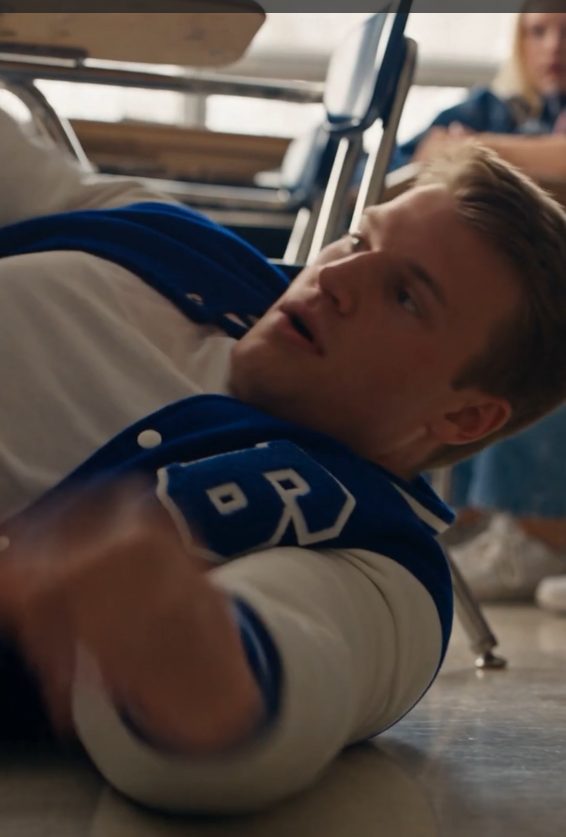
My mind returned to the classroom.
Ethan walking toward my desk.
His friends laughing.
The shove.
The phone.
DID SHE FIGHT BACK?
I slowly turned toward Ethan.
“You were doing the same thing.”
His eyes filled with shame.
“I didn’t know what it was.”
“You knew your father wanted you to hurt me.”
“I thought he just wanted to see whether you’d fight.”
“And that made it acceptable?”
He had no answer.
Dad continued explaining.
Anna eventually discovered her psychological file and the records of the experiments.
She copied documents exposing the entire operation.
And then she disappeared.
I looked at him.
“But you married her.”
“Years later.”
“Where did she go?”
“She changed her name.
She tried to build an ordinary life.”
“Because of Hawthorne?”
“Because of the people behind it.”
I sat back.
For seventeen years, I’d believed my mother was a nurse who loved terrible television shows, made pancakes on Sunday mornings, and sang off-key whenever she cleaned the kitchen.
She had been all those things.
But she’d also been a frightened young woman who had discovered a dangerous secret and spent years trying to escape the people determined to keep it buried.
I could barely reconcile the two versions of her.
Then another question occurred to me.
“If she was hiding from Hawthorne, why did you let me enroll here?”
Dad looked confused.
“I didn’t.”
I stared at him.
“What?”
“I never applied to Hawthorne for you.”
“You signed the forms.”
“After you were accepted.”
“I submitted the application online.”
He shook his head.
“No.
You filled out an interest form.”
“That was the application.”
“It wasn’t.”
Detective Torres opened his laptop.
“We’ve already checked the enrollment records.”
He rotated the screen.
My official application had been submitted three days before I filled out the school’s online form.
The timestamps were clear.
Someone inside Hawthorne had created the application.
Someone had processed it.
And I had been accepted before I ever asked to attend.
I stared at the screen until the numbers blurred.
“They wanted me here.”
Dad closed his eyes.
“That’s what I was afraid of.”
I turned toward him.
“Then why did you let me come?”
“Because I believed the program might finally be gone.”
“Why would you believe that?”
He hesitated.
Then said a name that made Ethan straighten.
“Jonathan Cole.”
Ethan stared.
“When?”
“Six months ago.”
My anger rose again.
“You’ve been talking to his father?”
Dad nodded.
“He contacted me after your mother died.”
“What did he want?”
“To apologize.”
“For what?”
Dad looked directly at Ethan.
“For betraying Anna.”
Ethan sank back into his chair.
Whatever he’d imagined his father’s involvement might be, it clearly hadn’t included betraying a girl he’d once called his friend.
I wanted to ask Dad more questions.
I wanted to know exactly what Jonathan had done, how much he knew, and why my father had trusted him again.
But before any of us could continue, Detective Torres received another call.
Vice Principal Grant had been located.
And the evidence officers were collecting would make everything we’d learned seem almost insignificant.
Grant was found at a motel two hours after fleeing Hawthorne.
Initially, he denied involvement in any conspiracy.
He claimed he’d left the classroom because he had become overwhelmed.
He insisted the messages on Ethan’s phone were being misunderstood.
He denied knowing anything about Anna Mercer.
Then investigators searched his vehicle.
They found a hard drive.
My name appeared on it 417 times.
CLAIRE BENNETT.
The drive contained a folder labeled:
MERCER RESPONSE STUDY — SECOND GENERATION.
When Detective Torres showed us what investigators had recovered, I felt something I couldn’t immediately name.
It wasn’t fear alone.
It was the sensation of discovering that your life had never been entirely your own.
There were photographs of me dating back to when I was six years old.
Soccer games.
School plays.
Walking home.
Standing outside grocery stores.
Sitting beside Dad in our car.





