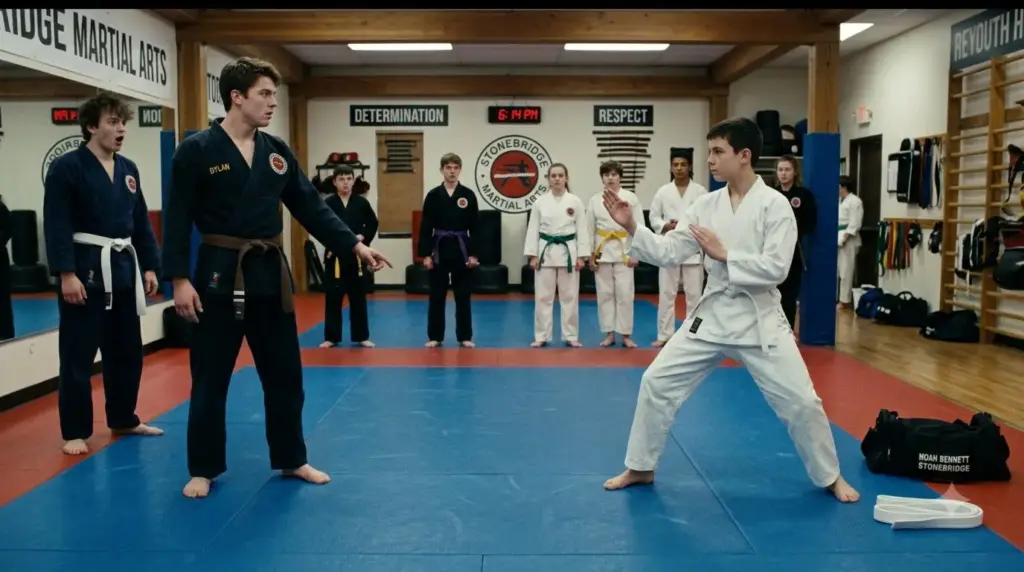
“You’re Dylan Mercer?”
Dylan straightened.
“Yes, sir.”
“I’ve heard you’re a strong competitor.”
Dylan smiled.
“Thank you.”
Samuel nodded.
“Coach Park tells me you’ve been working on patience.”
Dylan’s smile faded.
“Yes, sir.”
Samuel looked toward Noah.
“That boy over there has been training with me since he was eight.”
Dylan swallowed.
“I didn’t know.”
Samuel nodded.
“Most people didn’t.”
Dylan looked embarrassed.
Then Samuel said something that surprised him.
“That doesn’t mean you should have treated him differently.”
Dylan looked up.
Samuel continued.
“You should have treated him respectfully before you knew anything about him.”
Dylan stared at the floor.
“Yes, sir.”
Samuel placed a hand on his shoulder.
“Competition teaches you how to handle pressure. Character teaches you how to handle people.”
Dylan nodded.
“I understand.”
Samuel smiled.
“Good. Then show it.”
The following week, Dylan approached Noah before class.
No friends.
No audience.
No jokes.
Just the two of them near the equipment shelves.
“Noah?”
Noah looked up.
“Yeah?”
Dylan hesitated.
“I wanted to apologize.”
Noah waited.
“I was rude to you.”
“Yeah.”
“And I threw a punch when we weren’t sparring.”
Noah nodded.
“Yeah.”
Dylan looked uncomfortable.
“I shouldn’t have done that.”
Noah studied him.
Then said, “Okay.”
Dylan frowned.
“Okay?”
“Yeah.”
“You’re not mad?”
Noah considered the question.
“I was.”
“And now?”
“Not really.”
Dylan nodded slowly.
Then asked, “You want to drill sometime?”
Noah smiled faintly.
“Maybe.”
Dylan laughed.
“Fair.”
Months passed.
Noah continued training.
He learned Stonebridge’s techniques.
Adjusted to its rules.
Made friends.
And gradually became more comfortable speaking during class.
Dylan changed too.
Not overnight.
He still liked winning.
Still enjoyed competition.
Still sometimes became frustrated when things didn’t go his way.
But he began listening more.
He stopped correcting beginners without permission.
He learned to lose practice rounds without making excuses.
And one afternoon, when a younger student made a mistake during a drill, Dylan did something unusual.
He smiled.
“That’s okay. Try again.”
Elena noticed.
She said nothing.
But she smiled too.
At the end of the season, Stonebridge held a small in-house tournament.
Noah entered the junior division.
Dylan competed in the older age group.
They didn’t face each other.
Noah won his first match.
Lost his second.
Then won a consolation match.
He finished third.
Dylan won his division.
After the awards, he approached Noah.
“Good job.”
Noah smiled.
“You too.”
Dylan looked at the bronze medal around Noah’s neck.
“Not bad for a white belt.”
Noah laughed.
“Thanks.”
Dylan grinned.
Then added, “Seriously, though. You’ve got good timing.”
Noah nodded.
“You’ve got good kicks.”
For a moment, they stood awkwardly.
Then Dylan held out his fist.
Noah bumped it.
No dramatic speech.
No public apology.
No championship challenge.
Just two teenagers learning how to respect each other.
That evening, Noah placed his bronze medal on the kitchen table.
Rachel looked at it.
“Third place?”
He nodded.
“Yeah.”
She smiled.
“Proud of you.”
Noah shrugged.
“I could’ve done better.”
“Probably.”
He laughed.
Rachel continued.
“But you showed up. You competed. You learned.”
Noah nodded.
Then he looked at her.
“Mom?”
“Yeah?”
“Do you think Mr. Okafor was right?”
“About what?”
“That character matters more than winning.”
Rachel smiled.
“I think he was.”
Noah looked at his medal.
Then toward the white belt hanging beside his training bag.
He had worn it for months.
He knew he would eventually earn another rank.
But he wasn’t in a hurry.
Because he had learned something important.
A belt could tell people where you stood in a system.
A medal could tell them what happened in a competition.
Neither could tell them who you were.
And the next time somebody asked Noah Bennett whether he was going to cry, he knew exactly what he would do.
He would breathe.
He would stand calmly.
And he would remember that strength didn’t need an audience.
The End.





