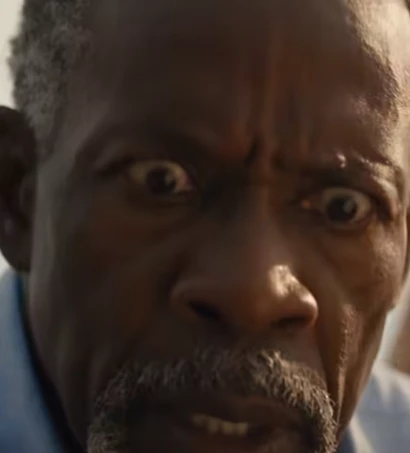
That Richard was her uncle.
And that David Carter had been one of the few people who had tried to protect her inheritance.
She listened without interrupting.
Then she looked at Bennett.
“You lied to me.”
He nodded.
“For fifteen years?”
Tears rolled down his cheeks.
“Yes.”
Grace stepped backward.
“Why?”
Bennett reached toward her.
“I thought I was protecting you.”
She shook her head.
“You were protecting yourself.”
And for the first time, Richard Bennett had to face someone whose disappointment mattered more to him than his reputation.
The Truth About the Accident
Two weeks later, investigators recovered the remaining records surrounding David Carter’s death.
The evidence revealed that David had discovered irregularities in the academy’s accounts and planned to report them.
He had confronted Bennett shortly before the accident.
But the accident itself had not been caused by Bennett.
Maintenance records showed that a faulty safety mechanism on the industrial equipment had been reported repeatedly and never repaired.
David had died because of negligence at the factory where he worked.
Bennett had not caused the accident.
But he had exploited the tragedy.
After David’s death, Bennett had concealed documents, diverted funds, and continued presenting the academy’s training methods as his own.
He had also threatened Denise when she questioned the missing money.
The truth was ugly enough without inventing another crime.
Bennett was removed as academy director while the financial case proceeded.
The board appointed independent administrators to oversee the charitable trust.
And for the first time in years, the academy’s doors began opening to children whose families could not afford elite training.
The Promise Beneath the Mound
Three months later, Elijah returned to the Ohio Elite Baseball Academy.
But the place looked different.
A new sign stood outside the entrance.
THE DAVID CARTER COMMUNITY BASEBALL PROGRAM
Beneath it were smaller words.
Every child deserves a chance.
The program provided free coaching, equipment, and transportation assistance to young athletes from low-income families.
Denise stood beside Elijah, holding Maya’s hand.
Marcus Reynolds waited near the pitcher’s mound.
And Grace Bennett stood beside him, wearing her red jersey.
She and Elijah had become friends.
They practiced together.
They argued about baseball.
And they had discovered that they shared something far more important than talent.
Both had lost parents.
Both had been lied to.
And both had inherited a dream that someone else had tried to steal.
Marcus approached Elijah.
“Ready?”
Elijah nodded.
“Yes, sir.”
Marcus glanced toward his cleats.
They were new.
A gift from the academy’s scholarship fund.
But Elijah had kept the old duct-taped pair in his backpack.
He said they reminded him where he came from.
Marcus handed him a baseball.
“Regulation mound today.”
Elijah smiled.
“That’s a little closer.”
Marcus laughed.
“Try not to break anything.”
Elijah stepped onto the mound.
He looked toward home plate.
The catcher raised his glove.
Denise watched from the bleachers.
Maya waved both arms.
“GO, ELIJAH!”
He inhaled.
Lifted his knee.
Rotated his hips.
And threw.
The baseball exploded toward home plate.
POP!
The radar display flashed.
101 MPH.
The crowd erupted.
Marcus grinned.
“Not bad.”
Elijah laughed.
“Not bad?”
“Room for improvement.”
They both smiled.
Then Marcus reached into his pocket.
“I almost forgot.”
He handed Elijah a small envelope.
Inside was an invitation.
A professional baseball development organization wanted Elijah to attend a supervised evaluation program when he became eligible.
Elijah stared at it.
“Is this real?”
Marcus nodded.
“Very real.”
Denise began crying.
Maya jumped up and down.
Grace hugged him.
But Elijah barely heard them.
Because beneath the invitation was another piece of paper.
A handwritten note from Marcus.
“Your father believed baseball should never belong only to those who could afford it.
Help me make sure he was right.”
Elijah looked toward the academy sign.
Then toward the children gathering near the entrance.
Some wore brand-new uniforms.
Others wore secondhand clothes.
One little boy had a glove held together with string.
Elijah recognized the look in his eyes.
The same nervous hope he had carried onto the field months earlier.
He walked toward the boy.
“What’s your name?”
“Marcus.”
Elijah smiled.
“That’s a good baseball name.”
The little boy looked down at his worn glove.
“Do you think they’ll let me try out?”
Elijah knelt beside him.
“Of course.”
“But my glove is broken.”
Elijah gently examined it.
Then he opened his backpack.
Inside were his old duct-taped cleats.
His father’s worn baseball.
And the letter he had found beneath the mound.
He took out the baseball and placed it in the child’s hand.
“Here.”
The boy stared.
“Is this yours?”
Elijah nodded.
“It belonged to my dad.”
“Why are you giving it to me?”
Elijah smiled through sudden tears.
“Because somebody once told me that baseball isn’t about what you wear.”
He looked toward Marcus Reynolds.
Then toward his mother.
Then toward the field where his father’s dream had finally come back to life.
“It’s about whether somebody gives you a chance.”
The little boy hugged the baseball.
And ran toward the field.
Elijah watched him go.
For a moment, he could almost hear his father’s voice again.
Don’t throw with fear, son.
Throw like you belong.
Elijah smiled.
Because after fifteen years of struggle, humiliation, and secrets, he finally understood something.
His father’s greatest achievement had never been a fastball.
It had never been a training program.
It had never been the money others had stolen.
David Carter’s greatest achievement was teaching his son that talent could open a door—but courage, kindness, and integrity determined what happened after you walked through it.
And on that bright Cleveland afternoon, as children from every neighborhood poured onto the baseball field, Elijah Carter made himself a promise.
He would become the best pitcher he could be.
But no matter how far baseball took him, he would never forget the boy who had arrived wearing shoes held together with duct tape.
Because that boy had taught him the most important lesson of all.





